
Ethical Alternatives to Shein: Where to Shop Instead
The low number on a Shein tag is not the whole price. Here is what investigations found, what to look for, and where to shop instead — including names that are not us.
The appeal and the rest of the price
Shein's appeal is not a mystery. A dress for the price of a coffee, a new trend in your cart before it has finished going viral, thousands of fresh styles dropping every single day. If you are on a budget and you like to look current, the maths is hard to argue with.
But the low number on the tag is not the whole price. More people are searching for ethical alternatives because the rest of the cost has become impossible to ignore: who makes the clothes, what they are made of, and where they end up. This guide lays out what is actually wrong, what a genuinely better option looks like, and where to shop instead, including a few names that are not us.
The people making the clothes
This is not vague hand-wringing. The evidence is specific, recent and easy to verify.
Swiss watchdog Public Eye surveyed workers across six Guangzhou factories and found staff routinely working 75-hour weeks on a piece-rate system, well beyond limits set by Chinese labour law. A January 2025 BBC investigation into Shein's suppliers reported the same pattern of excessive overtime and low pay.
Shein points to its own third-party audits showing above-average wages. Critics note those audits tend to measure monthly pay rather than hours worked — exactly where the problem sits. Shein's own 2023 sustainability disclosure also confirmed two child-labour cases in its supply chain.
The looks
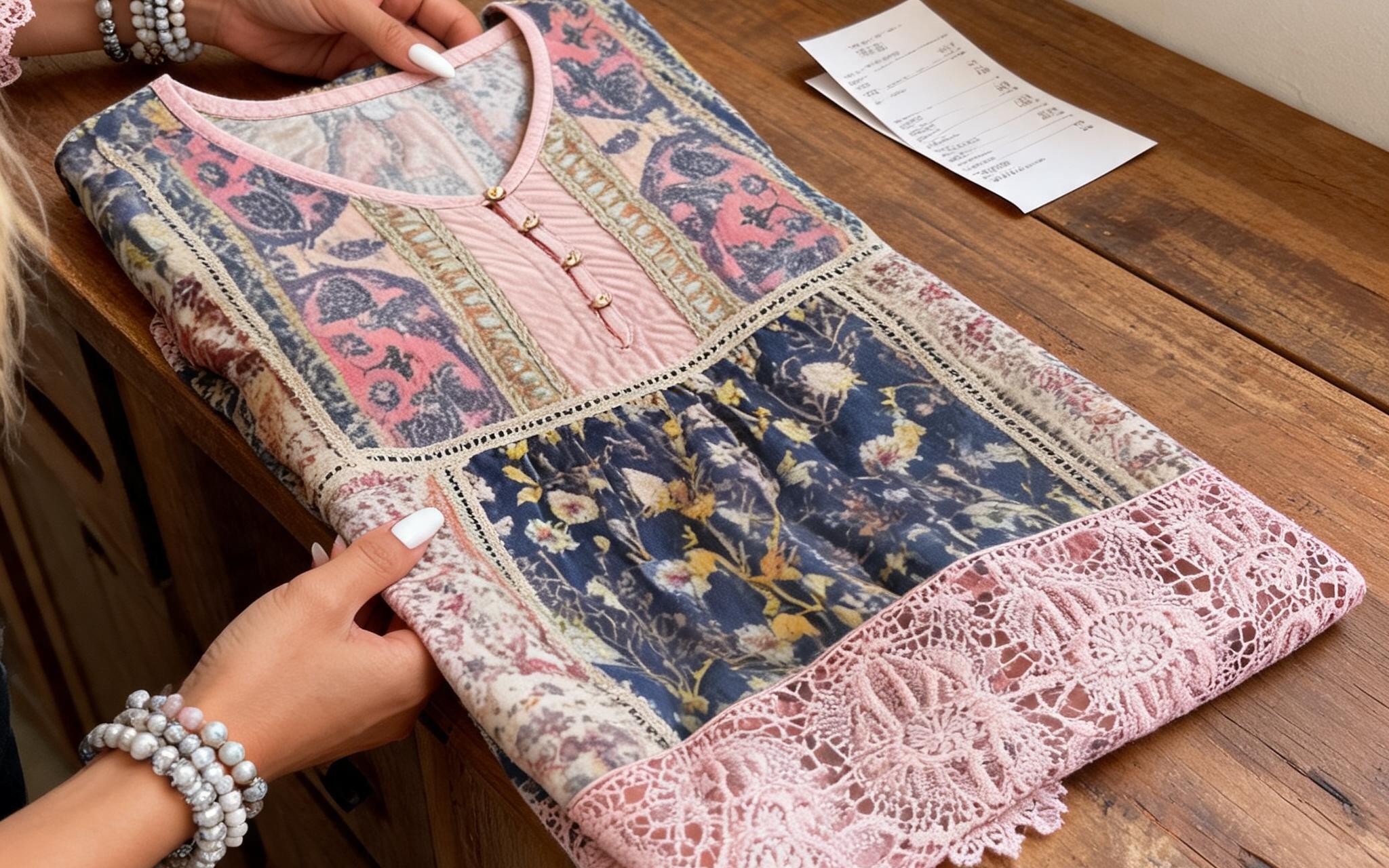
Real pieces in the store today, real prices, your size on the product page.


The environmental footprint
Shein's business model is built on volume. The company adds thousands of new styles a day and relies on synthetic fabric for the vast majority of its range. Polyester makes up roughly three-quarters of its materials, with only a small fraction of that recycled.
Shein reported emitting 16.7 million metric tons of CO2 in 2023, nearly double the previous year, much of it from air freight. Polyester is also a microplastics problem: a single wash of synthetic garments can shed hundreds of thousands of plastic fibres into the water system.
Cheap clothes made to last a season are designed, in effect, to become waste.
Buying less but better usually costs about the same over a year, because the replacements stop.
Chemicals, safety and regulators
In a 2025 study, Greenpeace bought and lab-tested 56 Shein garments from eight countries. Almost a third breached EU REACH chemical-safety limits, including children's items. Some jackets exceeded PFAS ("forever chemical") limits by thousands of times.
A joint operation by consumer regulators in Belgium, Germany, Denmark and France found toys, chargers and jewellery from Shein and Temu failing EU safety standards. French customs reported a 25% non-compliance rate after inspecting parcels at Charles de Gaulle airport.
In May 2025 the European Commission and the EU's Consumer Protection Cooperation Network — after an investigation led by authorities in Belgium, France, Ireland and the Netherlands — found Shein in breach of EU consumer law: fake discounts, fake countdown deadlines and other "dark patterns" designed to pressure shoppers. A parallel Digital Services Act probe is examining illegal products and the recommender system that keeps people scrolling.
In June 2025 France passed a law specifically targeting ultra-fast fashion, introducing a per-item eco-tax (starting at €5) and a ban on advertising the category, though it is currently being reconciled with EU single-market rules.
What to look for, and where to go
"Ethical" and "sustainable" are slippery words printed on anything. A useful filter cuts through the marketing. Look for transparency — can you find out where and how something was made, or is the supply chain a black box? Materials — natural and certified fibres, recycled content, or an honest account of what the garment is made from. Worker treatment — a brand that speaks to its sourcing rather than hiding behind a thousand anonymous factories. Durability — the real test of sustainability is the wear count. EU shipping and returns — shorter freight, fewer customs surprises, products already under EU safety and consumer rules.
The lowest-impact wardrobe is one that already exists. Vinted (Lithuanian, huge across the EU) and Vestiaire Collective (Paris-based, for pre-loved designer and premium) keep clothes in circulation and are often cheaper than buying new.
For new pieces with supply-chain credentials, Armedangels (Cologne, GOTS-certified organic cotton, transparent sourcing) and Nudie Jeans (Swedish, organic denim with free repairs for life) are established names — bigger, pricier, and built around specific categories rather than a full wardrobe.
WowStore is a Netherlands-based conscious store built for the gap those options leave: well-curated, current pieces across a full wardrobe, shipped within the EU, without the ultra-fast-fashion churn. The edit has a quiet-luxury sensibility — pieces meant to be worn for years, not discarded after a season. You will find women's and men's fashion, from everyday basics to dresses worth keeping, plus jewellery and activewear. 5% of each sale goes to a cause you choose. That sits inside a bigger idea called the 1% Movement: the thesis that it does not take everyone to shift the market, only a committed 1% of conscious shoppers choosing to buy differently.
How to make the switch
Build a small capsule. Pick a handful of pieces that mix and match, in colours you actually wear. A focused wardrobe beats a closet full of impulse buys.
Buy less, choose better. Before adding to cart, ask whether you will wear it thirty times. If not, skip it. This one habit undoes most of the fast-fashion trap.
Care for what you own. Wash cooler and less often, use a microfibre-catching laundry bag for any synthetics, air-dry, and repair small damage instead of replacing. Garments last far longer than the season they were sold for.
Start gradually. You do not need to bin your wardrobe. Replace as things wear out, and shift the next purchase — not all of them — to a better option. In honesty, Shein still suits some situations: a one-off costume, a single-wear item, or an extremely tight budget where €8 versus €40 is a real decision. The goal is not guilt but making the cost visible so the choice is yours.
Create your avatar (free) and see any piece on you before you decide. Lucy, our AI stylist, builds the look from what you tell her. If the piece you have in mind is not on this page, ask her: she can show any piece in the store on your avatar and, once you have bought a look, make a short film of it. Then play today's styling brief, invite a friend and share your moment.
Makeover in the Magic MirrorAsk LucyPlay today's brief
Photographs marked "AI render" are AI-generated illustrations; product images are the real pieces. Lucy, our stylist, is AI. 5% of each sale goes to a cause you choose.
How to build a capsule wardrobe with vintage & retro?
Ethical Alternatives to ASOS: 4 Conscious Picks
Related Posts

Herenkleding online: welke maten er deze week op voorraad liggen, wat het kost en hoe lang het duurt

Women's fashion in Eindhoven: three looks for the city, sizes in stock, real prices, tried on you first

Sustainable fashion in the Netherlands: how we choose, what it costs, three pieces

What to wear to Dutch Design Week 2026: three looks, one rule, nine days on foot in Eindhoven

WowStore vs Zara: Honest Comparison (2026)

WowStore vs Shein: Honest Comparison (2026)

WowStore vs Primark: An Honest Comparison


