Sustainable Fashion Trends 2026: What's Changing

Sustainable Fashion Trends 2026: What's Changing

For about a decade, "sustainable fashion" was mostly a tone of voice. A hangtag in earthy ink. A landing page with a photo of a forest. A word, conscious, eco, green, doing the heavy lifting that the supply chain wouldn't. 2026 is the year that arrangement ends. Not because brands had a collective change of heart, but because the vague version of sustainability is becoming illegal to advertise in Europe, and because shoppers, squeezed and a little exhausted, have started voting with their wallets for the opposite of more.

This is the genuine landscape heading into the back half of 2026: less marketing, more mechanism. Here are the trends that are actually moving, each one grounded in a regulation, a market shift, or a measurable change in behaviour, not a mood board.

1. Greenwashing stops being a strategy and becomes a liability

On 27 September 2026, the EU's Empowering Consumers for the Green Transition directive (EmpCo) takes effect across all member states. It rewrites the rules on what a brand is allowed to say. Blanket terms, "eco-friendly," "green," "sustainable," "biodegradable," "biobased," are banned when used on their own. You can write "made with 95% GOTS-certified organic cotton." You cannot write "sustainably made" and leave it there. Self-invented logos and unverified eco-badges are out unless they rest on independent, third-party certification. And product-level "carbon neutral" or "climate neutral" claims achieved purely through offset credits are prohibited outright.

The practical effect is a quiet purge. A lot of the language the industry has leaned on for years simply can't appear on a label or an ad after September. Brands that built their identity on adjectives rather than evidence have a problem. Brands that can show their work have an advantage for the first time.

2. The Digital Product Passport gives every garment a paper trail

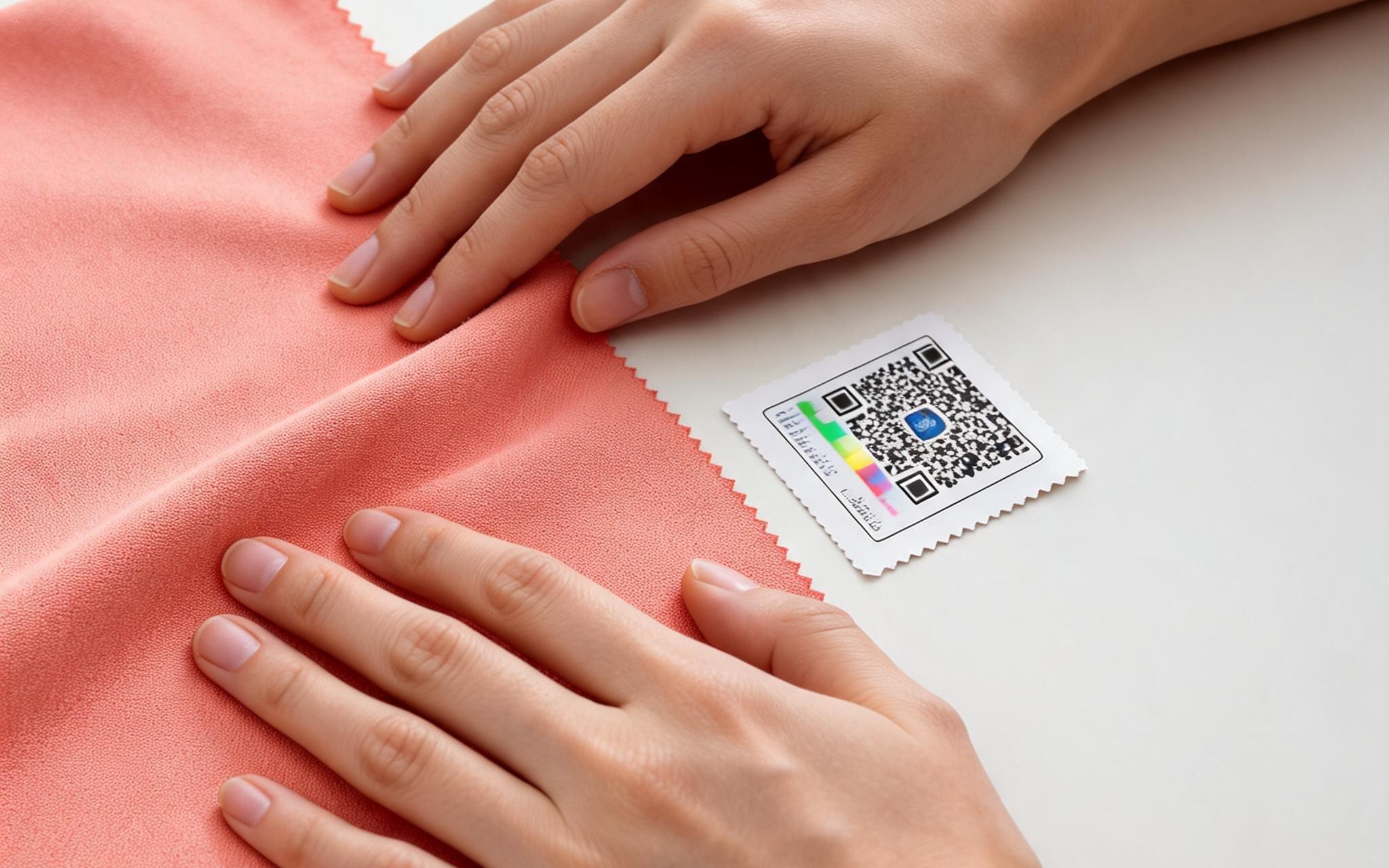
Under the EU's Ecodesign for Sustainable Products Regulation (ESPR), textiles are slated for a Digital Product Passport, a scannable record of what a garment is made of, where it came from, and how to repair or recycle it. The textile delegated act is expected to be adopted around late 2026 or early 2027, with mandatory compliance realistically arriving in 2027-2028. A centralised EU DPP registry is due to be operational by mid-2026, and the technical standards that every passport must follow are being finalised this year.

It is not live on your jeans yet. But the infrastructure is being poured in 2026, and the direction is unambiguous: transparency is shifting from a brand's marketing choice to a product's legal requirement. The "trust me" era of supply-chain claims is ending.

3. Regulation gets teeth — France goes after ultra-fast fashion

France's anti-fast-fashion law, often called Loi Violland, passed the Senate in June 2025 by 337 votes to one. It proposes per-item environmental penalties, at least €10 per garment by 2030, or up to 50% of the pre-tax price, plus an advertising ban on ultra-fast-fashion goods and the influencers who promote them. The catch: the European Commission flagged the bill in 2025 as potentially incompatible with single-market rules, since Shein and Temu run their EU operations out of Ireland. The law is in limbo while Paris and Brussels negotiate.

Whether or not the French text survives in full, the signal landed. National governments are now willing to put a price on disposability, and the ultra-cheap, ultra-fast model is, for the first time, a regulatory target rather than a regulatory blind spot.

4. Textile waste becomes the producer's problem, not the planet's

Since 1 January 2025, separate collection of textile waste has been mandatory across the EU. Then in October 2025, the revised Waste Framework Directive entered into force, establishing an EU-wide Extended Producer Responsibility (EPR) obligation for textiles and footwear for the first time. Producers will pay a fee per item placed on the market to fund collection, sorting and recycling, and crucially, those fees are eco-modulated: better designed, more durable, more recyclable products cost less. Operational schemes are expected to roll out across member states through 2027-2028.

This is the part that reshapes design rooms. When the cost of a garment's afterlife lands back on its maker, "designed to fall apart" stops being free. Durability moves from a virtue to a line item.

5. Materials move from another industry's waste to genuine textile-to-textile recycling

For years, "recycled" mostly meant polyester spun from plastic bottles. In 2026 that's increasingly seen as a stopgap. As Textile Exchange's chief executive put it bluntly, "We cannot build a circular textile system on another industry's waste." The frontier now is true textile-to-textile (T2T) closed-loop recycling, turning old clothes back into new fibre, alongside bio-based synthetics like the bio-based nylon emerging from industry partnerships.

The money is following. The sustainable fabrics market is forecast to reach roughly $41 billion in 2026, up from about $37 billion in 2025, on its way past $115 billion by 2035. Chemical recycling is approaching cost parity with virgin production at commercial scale. The honest caveat: T2T is still a small fraction of supply, and "recycled" on a hangtag still usually means bottles, not garments. But the trajectory is real, and the standard of proof is rising.

6. Resale, rental and repair grow up into the industry's fastest-moving segment

Circularity has stopped being a side hustle. The global secondhand apparel market is heading toward roughly $350 billion, and secondhand is growing several times faster than new fashion, according to ThredUp's 2026 resale data. The dedicated circular-fashion market (resale, rental, repair, take-back) was valued near $7.6 billion in 2025 and is projected to nearly double by 2032 at around 9% annual growth. Rental alone is climbing year on year.

What's changed is the embedding. Resale is becoming a normal part of how people manage their wardrobes and their budgets, not a novelty, and brands are increasingly building take-back and resale into their own models rather than ceding the ground to third parties. Buying pre-owned is no longer the compromise option; for a growing slice of shoppers it's the default first move.

7. "Buy less, buy better" goes from slogan to genuine behaviour

The most interesting shift of 2026 isn't on a balance sheet, it's in the culture. Quiet luxury, with its premium on garments you keep for years instead of seasons, has merged with "underconsumption core," a movement that started on TikTok and got name-checked in the UN Environment Programme's Black Friday messaging. The mantra is simple: buy less, choose well, keep it longer.

Some of this is values, and some of it is economics, younger shoppers are financially squeezed and climate-aware at the same time, and both pressures point the same way: away from the haul, toward the considered purchase. It's the rare trend where the sustainable choice and the desirable choice have finally lined up. Fewer, better things now reads as taste, not sacrifice.

8. Proof beats promise — transparency becomes the new baseline

Tie the threads together and a single theme emerges. EmpCo bans the vague claim. The Digital Product Passport demands a verifiable record. EPR fees reward designs that can prove durability. Third-party certification replaces the made-up logo. Across the board, 2026 is shifting the burden from saying to showing. The brands that thrive will be the ones that can answer "prove it," about a fibre, a factory, a footprint, without flinching. The rest will run out of road as the words they relied on quietly disappear from the rulebook.

What this means for you as a shopper

You don't need to memorise directives to shop smarter in 2026. A few habits do most of the work:

  • Distrust the adjective, trust the specific. "Sustainable" tells you nothing. "100% organic certified cotton" or "GRS-certified recycled wool" tells you something. After September, the vague version is on its way out anyway, get ahead of it.
  • Check who certified it. An independent label (GOTS, GRS, OEKO-TEX, Fair Trade) carries more weight than a brand's own house badge.
  • Treat "carbon neutral" with caution. If neutrality rests purely on offsets, EU rules now consider that misleading. Look for actual reduction, not just credits.
  • Buy fewer, better, and keep them. The single most sustainable thing you can do is wear what you own for longer. A well-made piece you keep for five years beats five "eco" pieces you replace each season.
  • Make resale and repair your first move, not your last resort. Pre-owned and repaired clothing is the lowest-impact way to dress well.
  • Favour curation over volume. Stores that choose a tight, considered range tend to be making decisions you'd otherwise have to make yourself.

Where WowStore fits — honestly

We'll be straight with you: WowStore is a newer, smaller NL/EU store, not a heritage label with a decade of audited supply-chain reports behind it. What we can speak to is how we choose. We curate for the quiet-luxury, buy-better end of the spectrum, fewer, considered pieces meant to be worn and kept, rather than a firehose of disposable trends. That curation philosophy is the same instinct driving the 2026 consumer shift: we'd rather help you buy one thing you'll love than ten you won't.

On the giving-back side, we keep it specific because vague is exactly what EmpCo is designed to stamp out: WowStore donates 5% of every sale, of the sale, not of profit, to causes supporting women's empowerment. Separately, our "1% Movement" is an adoption thesis, not a donation figure: the idea that meaningful change happens when roughly 1% of people shift how they shop. The 1% is the movement; the 5% is the money. We keep those two ideas distinct on purpose, because conflating them would be the kind of fuzzy claim this whole article is about leaving behind.

If that approach fits how you want to shop in 2026, start with our sustainable fashion collection, browse women's fashion, or see what's just landed in new arrivals. For the bigger picture, our guide to ethical alternatives to fast fashion is the hub, and if the give-back angle matters most to you, read about fashion brands that donate to women's empowerment.

Frequently asked questions

What is the biggest change in sustainable fashion for 2026?

Regulation. On 27 September 2026, the EU's EmpCo directive bans vague environmental claims like "eco-friendly" and "sustainable" unless they're backed by specific, verifiable evidence, and bans offset-only "carbon neutral" claims. Combined with the incoming Digital Product Passport and EU-wide producer responsibility for textile waste, 2026 is the year sustainability shifts from a marketing word to a legal obligation to prove what you say.

Is "recycled" clothing actually sustainable?

It's better than virgin synthetics, but it depends on the source. Most "recycled polyester" today comes from plastic bottles, not old clothes, a stopgap the industry is now trying to move past toward genuine textile-to-textile recycling. Look for the specific certification (such as GRS) and treat "recycled" as one data point, not a guarantee.

Does buying secondhand really make a difference?

Yes, it's one of the highest-impact choices available. The secondhand apparel market is approaching $350 billion and growing several times faster than new fashion. Extending a garment's life through resale, rental or repair avoids the impact of producing something new entirely, which is why circularity is the industry's fastest-growing segment in 2026.

How can I tell if a brand is greenwashing?

Look for specifics over slogans. A vague "conscious" or "green" claim with no detail is a red flag, and after September 2026 it's also against EU rules. Trust independent third-party certifications over a brand's own invented logos, and be wary of "carbon neutral" claims that rely only on offsets rather than actual emissions reductions.

Related Posts

WowStore vs Zara: Honest Comparison (2026)

Both sell women's fashion to the Netherlands and the rest of the EU, and that's roughly where the similarity ends. Zara is the engine...
Post by WowStore
Jun 21 2026

WowStore vs Shein: Honest Comparison (2026)

Let's not pretend this is a fair fight on price, because it isn't. Shein sells dresses for less than a sandwich, and no conscious...
Post by WowStore
Jun 21 2026

WowStore vs Primark: An Honest Comparison

If you are weighing up WowStore against Primark, let's be honest from the first line: on the price tag, Primark wins. A £3 t-shirt...
Post by WowStore
Jun 21 2026

WowStore vs H&M: Honest Comparison (2026)

Search "wowstore vs h&m" and you're probably weighing two very different ways to buy clothes. One is a global fast-fashion giant with thousands of...
Post by WowStore
Jun 21 2026

Ethical Alternatives to Fast Fashion: 2026 Guide

Search "ethical alternatives to fast fashion" and you get a wall of listicles, most of them either vague or quietly sponsored. That gap is...
Post by WowStore
Jun 21 2026

Most Sustainable Fashion Brands 2026: Honest Guide

"Sustainable" has become the most overworked word in fashion. It's stamped on a €6 T-shirt and a €600 coat with equal confidence, and most...
Post by WowStore
Jun 21 2026

Fashion Brands That Give Back: A Verify-First Guide

Walk through any conscious-fashion checkout and you'll meet a quiet promise: buy this, and a little good goes into the world. A tree planted....
Post by Shopify API
Apr 10 2026